
How Aftermarket Motorcycle Parts are Manufactured
When it comes to aftermarket parts and accessories in the motorcycle industry, you'll often hear the words Billet, Forged, and Cast thrown around to describe the quality or manufacturing process of the products. While this isn't a science project about different metal or metal processing, we will cover what those descriptions refer to and help educate you about the manufacturing process that goes into constructing most products.
The amount of time and effort that goes into producing the metals for the product foundation is simply amazing. Most aftermarket products are produced from aluminum or steel alloys. Aluminum is highly valued for its lightweight strength and naturally non-corrosive properties while steel, though heavier, is appreciated for its durability and strength. Because of these factors, aluminum and steel are typically the go-to when producing aftermarket motorcycle parts - from handlebars to gas tanks, wheels to forks.
It is very important to understand that the metals utilized during the manufacturing process are not created equal - quality matters! According to the World Steel Association, there are over 3,500 different grades of steel, all with unique physical, chemical and environmental properties. Each manufacturer may choose to use different grades of aluminum or steel for different products. If you aren't sure about the quality of a manufacturer, be certain to reach out and ask. We will be able to give an honest opinion about each brand and product so that you can buy with confidence.
Now, let's get to the basics of aftermarket motorcycle parts manufacturing and what it really means for you.
Billet
Simply put, during the manufacturing process a solid chunk of metal (usually a grade of aluminum) is positioned in a CNC (Computer Numerical Control) machine where it is precision cut into the exact dimensions and design indicated by the manufacturer.
Despite the assumptions of many, billeted parts are not automatically superior to their cast or forged counterparts. This is where the quality of the metal is important because if you start with an inferior chunk of metal your final product will also be inferior despite how perfect the detail work looks. This is why some manufacturers also associate the grade used when referring to"billet aluminum" products. The most commonly used grade is 6061 T-6, noted for its overall strength and toughness as well as good finishing characteristics. This particular grade of aluminum responds well to anodizing, including clear-coat, clear and color dye, and hard-coat, and is easily welded and joined for later fabrication purposes.
A final billeted product should have a very smooth finish with no flaws due to the precision of the CNC machine. These pieces usually end up on the high-end of the price spectrum due to the overall cost/operation of the CNC machines used, as well as the actual material costs.
Cast
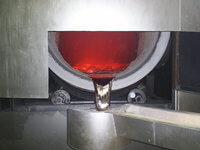
This process has long been used to make economical and reliable parts that consistently meet specified requirements. Casting allows manufacturers the freedom to design and produce unique parts with a majority of their expense being the actual molds used during production, as well as the material costs. During production scrapped/recycled metals are melted into molten aluminum/steel and then poured into a mold to create the desired design.
While this process has certain benefits, it can have complications. Though the grade of materials used is important, the imperfections can result from the actual manufacturing process. During the heating, pouring and cooling process irregularities may occur that can make the final product undesirable. With die casting, the most common defects found are 'misruns' or 'cold shuts.' They can be caused by cold dies, low metal temperatures, dirty metal, lack of venting, or too much lubricant. Other possible defects are gas porosity, shrinkage porosity, hot tears, and flow marks.
The final product finish will only be as perfect as the molds used, and any imperfections or 'defects' may or may not be noticeable. Depending on the specific product, the final piece may or may not be finished in a CNC machine for final details and specs. Products that are cast will usually cost you less, and will most often produce a quality product. Just be sure to choose a manufacturer with a good reputation for quality parts.
Forged
During the forging process, metal is heated and then 'hammered' in forging dies to create the desired shaped or form to produce a high performing, strong final product. A forged aluminum piece gains added strength during the compression process due to the continuous heating, breaking and forming of new microscopic crystal structures within the metal material.
Once again, depending on the specific product, the final product is usually finished in a CNC machine for final details and specs. Overall, cost and look of the final product will vary depending on the part and the manufacturer.
While shopping around, do your best to find out what it is exactly you are buying, all while appreciating the work that goes into producing the wide range of elaborate aftermarket products available. Whenever possible, quality should be your first priority when purchasing an aftermarket piece for your Harley Davidson or any motorcycle. However, style, price, availability, and other factors certainly play a large role as well.