
A Rider's Guide to Motorcycle Helmets
Spring is here! Riding season has begun and it's time to unleash your bike and get back on the road. Whether you're headed to the track or the trail, it's a good idea to take stock of your gear before you hit the gas, starting with the most important piece of gear you own, your helmet.
Let's start with the basics - when you ride a motorcycle, you should wear a motorcycle helmet. And not just because your mom said so, but because it can literally save your life. With so many choices on the market, it's important to find the right helmet for you - one that provides proper fit, comfort, protection and performance all while fitting your riding style.
Depending on what state you live in, you may or may not be required by law to wear a helmet. Some states require it out right, while others view age as the determining factor. Currently, 19 states including the District of Columbia require that all motorcyclists wear a helmet, while 28 states require riders to wear a helmet based on age. New Hampshire, Iowa and Illinois stand alone as the only states with no law on helmet regulations.

Regardless of whether your state requires it or not, we at Get Lowered Cycles absolutely encourage you to cover your noggin anytime you take your bike out for a ride. We never leave home without ours and neither should you.
So what are your options when it comes to buying a motorcycle helmet? There are hundreds of helmets to choose from, so let's go over some of the standard types of motorcycle helmets you may come across on the market right now:
 Full Face: A full face helmet offers the
most comprehensive protection, with a design that features a hard chin shell, a
face shield and full coverage extended to the back of the head. Most
manufacturers have developed advanced ventilation systems to combat the
stuffiness you may experience with a full face helmet. The full face helmet can
cover a wide variety of riders including Street, Harley, Touring and even the
Cruiser crowd.
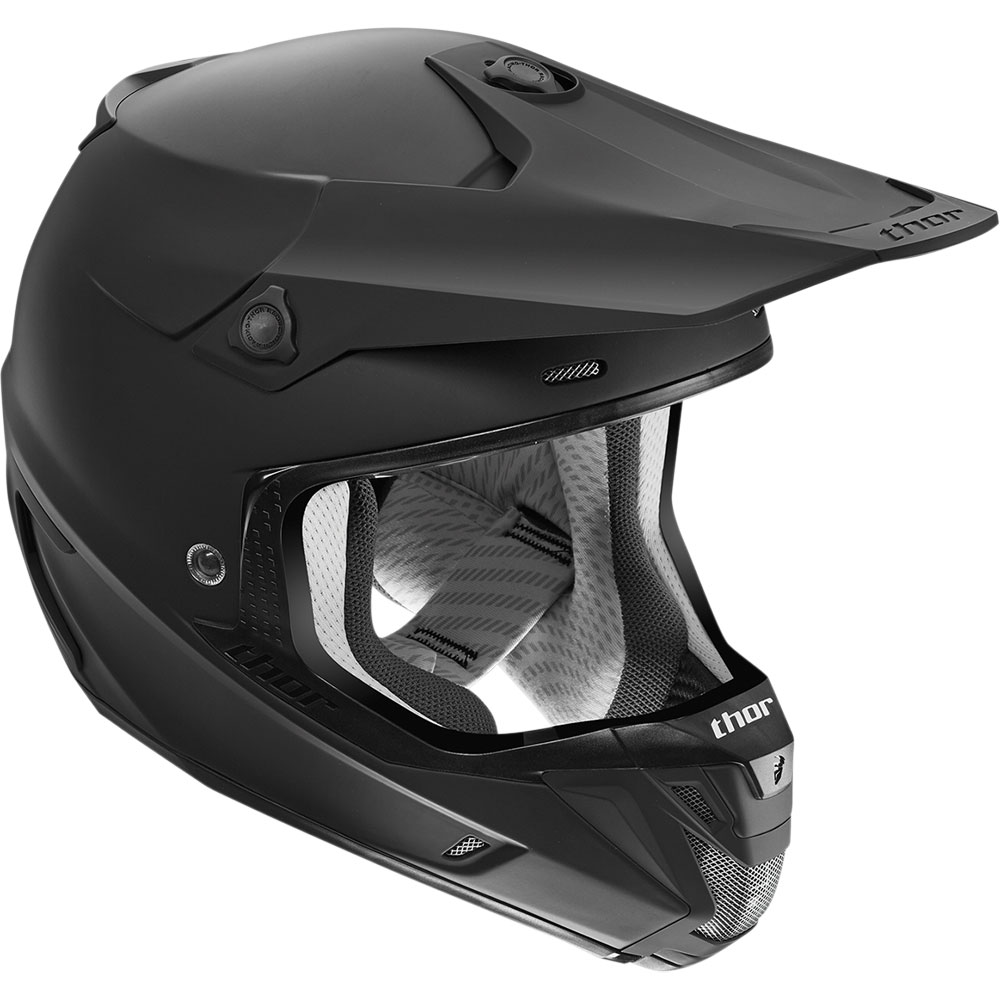
Off Road: Similar to a full face helmet, an off-road or motocross helmet provides full face protection, but also features an open eye area which allows riders the use of riding goggles. A major difference being the visor which is worn to protect the rider from dirt or roost. This type of helmet is often worn by motocross or off-road/adventure riders.
 Modular: Versatility highlights this helmet, as
a typical modular can be used in 'full face mode' or adjusted to use as an open
face option. Different models offer removable visors and chin bars that can
quickly be reconfigured. Consider the
modular helmet your 'all-in-one'
adaptable choice. This type of helmet is most popular for the Cruiser or
Touring crowd who prefer a helmet that can easily adapt to any situation they
may experience while out on the road.

Open Face: With or without a face shield, the open face helmet provides ample protection to the top, sides and back of your head, but does not feature any type of chin protection. Face shields and visors may be added and many riders will wear goggles to make up for a lack of face shield. The open face helmet can be great for versatility - you can rock a bubble shield, a flip shield, short visor or any goggles that may suit your style that day.

Half Helmet: Also referred to as a "shorty" or a "half shell" a half helmet is the simplest of the group, covering the top, side and back of the head only. This is typically the least protective helmet option as it does not provide the same amount of coverage as the others. However, a helmet is better than no helmet at all. This style is common for the Harley crowd who tend to prefer the minimalistic look and feel the Half Helmet has to offer.
If you don't already own a motorcycle helmet but you own a motorcycle, it would probably be in your best interest to get one. If you already own a helmet, the question for you is how long have you had it? There's no definitive answer on how long a helmet can last you, but nearly every manufacturer as well as the independent Snell Foundation recommends replacing your helmet after five years of use, if not sooner. It should be no secret that internal components of a helmet can break down over time with the use of glues, resins and other adhesives. Even hair oil, body fluid and cosmetics can contribute to the gradual decomposition of your helmet.
Also, if you are ever in a crash or your helmet has taken the brunt of a hard impact, care should be taken to replace it. Even if there are no visible signs of damage on the outside, portions of the helmet on the inside may have been damaged. This is usually where the EPS (expanded polystyrene) liner comes into the story. It is the layer of the helmet that sits between the interior padding and the exterior shell. It is responsible for most of the work when preventing the force of the impact from reaching your head. If any impact is absorbed by the helmet while in use, you should strongly consider finding a replacement.
Add in the fact that helmet technology and helmet materials are constantly improving, it only makes sense to upgrade your lid and take advantage of the most advanced safety features on the market.
With safety in mind, let's review briefly the three main
helmet certifications currently found in the United States. Keep in mind
that a particular helmet, depending on the helmet type and the manufacturer, can
have only one or all three certifications on the back. Each organization
measures certain factors about the
helmet such as: the helmet's ability to absorb an impact, its ability to
withstand a blow from a sharp object, the chin straps ability to stay fastened
under duress, and whether or not a minimum of 105 degrees of side vision is
available to the rider.

- DOT (Department of Transportation), usually the most common helmet certification, this is the official US government approved standard. If you live in one of the states that requires a helmet, you will most definitely need to buy one that at least has the DOT sticker on the back!
- Snell is an independent, non-profit organization established to honor namesake Pete "William" Snell, who died tragically in an auto racing accident. Over time, Dr. George Snively continually developed higher protective standards from the helmet industry, thanks largely to the support of an ever-growing motorcycle community. Some claim that Snell's standards are often harder to pass than the DOT standards.
- ECE R22.05 this sets the standard for the United Nations Economic Commission in Europe as well as over 50 other countries. Many professional/competitive racing events such as those governed by AMA, WERA, FIM, Formula USA and MotoGP use ECE R22.05 as their certification standard. Most riders find it comforting to know this certification is used for professional riders.
Riders and industry leaders alike debate which of the certifications offer the best standards, but you can be confident that a helmet that passes any of the criteria is a safe, highly protective helmet.
A little education can go a long way. The best helmet you can buy is the one you give little attention to while riding. The helmet should feel like a natural extension of you, not something that causes you irritation while doing your favorite 2 wheel activity. That being said, it is vital to have the right protection on your head if you should take a tumble.
Take advantage of buying a helmet from Get Lowered Cycles! We not only offer Free Shipping on each and every order, but we're also happy to exchange returns for a different size or style. So if your helmet isn't quite the fit you need, we can replace it with no questions asked and at no additional charge.